NADIS & African Veterinary Technicians Association
ACVLA
African Clinical Veterinary Livestock Apps (ACVLA) — Is a joint venture partnership between NADIS and the AVTA (Africa Veterinary Technicians Association). Access to farm animal vets in much of Sub-Saharan Africa is limited. More than 80% of livestock cases are seen by Veterinary Paraprofessionals (VPPs), who may have varying degrees of knowledge and experience.
80%+
livestock cases seen by VPPs
12,000
qualified VPPs in Kenya
Supporting VPPs where veterinary access is limited
Communication between authorities, vets, VPPs and farmers is often sporadic, making disease awareness, disease surveillance and disease prevention difficult. Over the past 3 years NADIS has developed an integrated digital platform of apps that will assist in addressing these problems in a sustainable and scalable way. The digital platform will be provided free at the point of use for registered vets and VPPs.
The platform
Five tools. One platform
Module 01
Clinical Sign Recognition
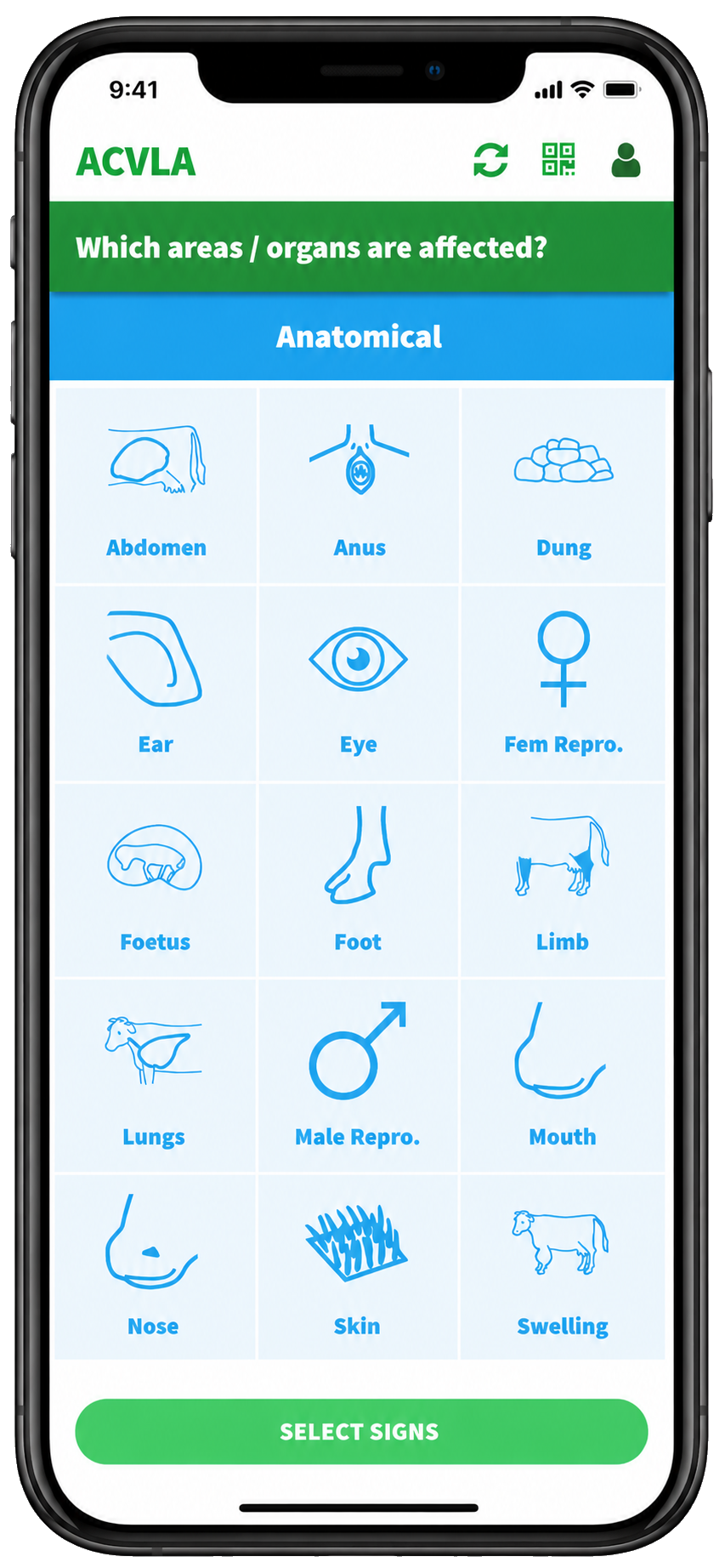
Better treatment outcomes, user-friendly design, fast workflow, and free access for registered VPPs, help to ensure CSR is widely used by VPPs in their daily work. Clinical signs in an animal being examined are matched with clinical images in the app, thereby avoiding language and literacy barriers. After a series of prompts to aid further examination and history taking, a "best match" disease is selected by the VPP. This links to reliable, concise information on laboratory tests, prevention and treatment. The most appropriate treatment options for the identified disease are provided by the University of Nairobi Veterinary Faculty, helping to ensure optimal medicine selection conforming to best practice responsible use.
- Match observed signs to clinical images in the app
- Guided prompts for examination and history taking
- Best-match disease with concise diagnosis, prevention and treatment guidance
- Treatment options reviewed with the University of Nairobi Veterinary Faculty
Module 02
Authorised Medicines Compendium
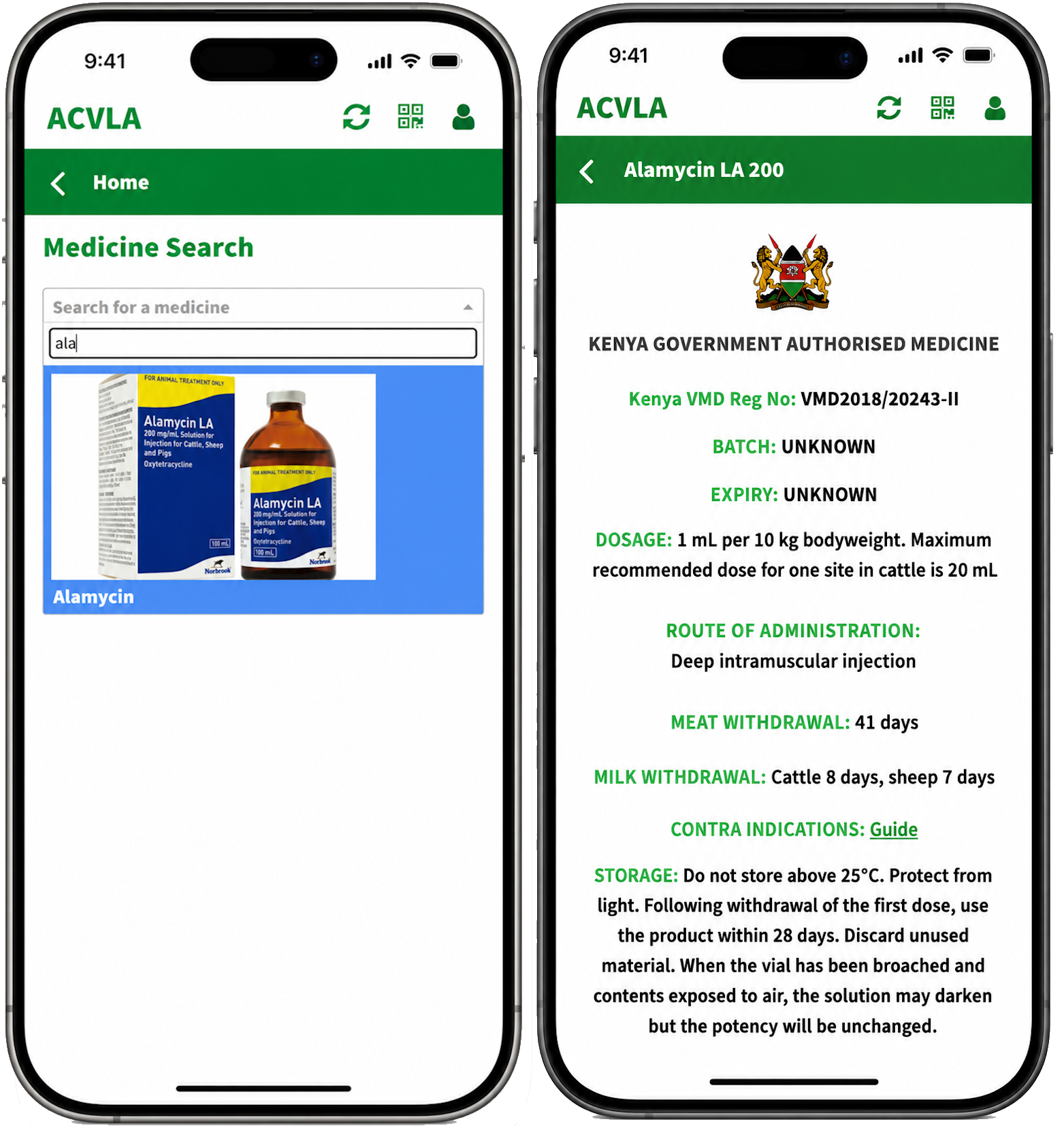
The Authorised Medicines Compendium contains all the commonly used authorised medicines and therefore differentiates them from unauthorised medicines, which are widely used in some parts of Africa. Reliable, pen-side medicine use information alongside best practice advice is given to help combat the misuse of anthelmintics, antibiotics and acaricides that drives the development of resistance. By working closely with the relevant authorities, NADIS will ensure all licensed medicines for the area are included.
- Reliable pen-side medicine information and best-practice advice
- Helps tackle misuse that drives antimicrobial and acaricide resistance
- Scan to confirm products are authorised and genuine
- Licensed medicines maintained with relevant authorities for each area
Module 03
Disease incidence & medicine use data
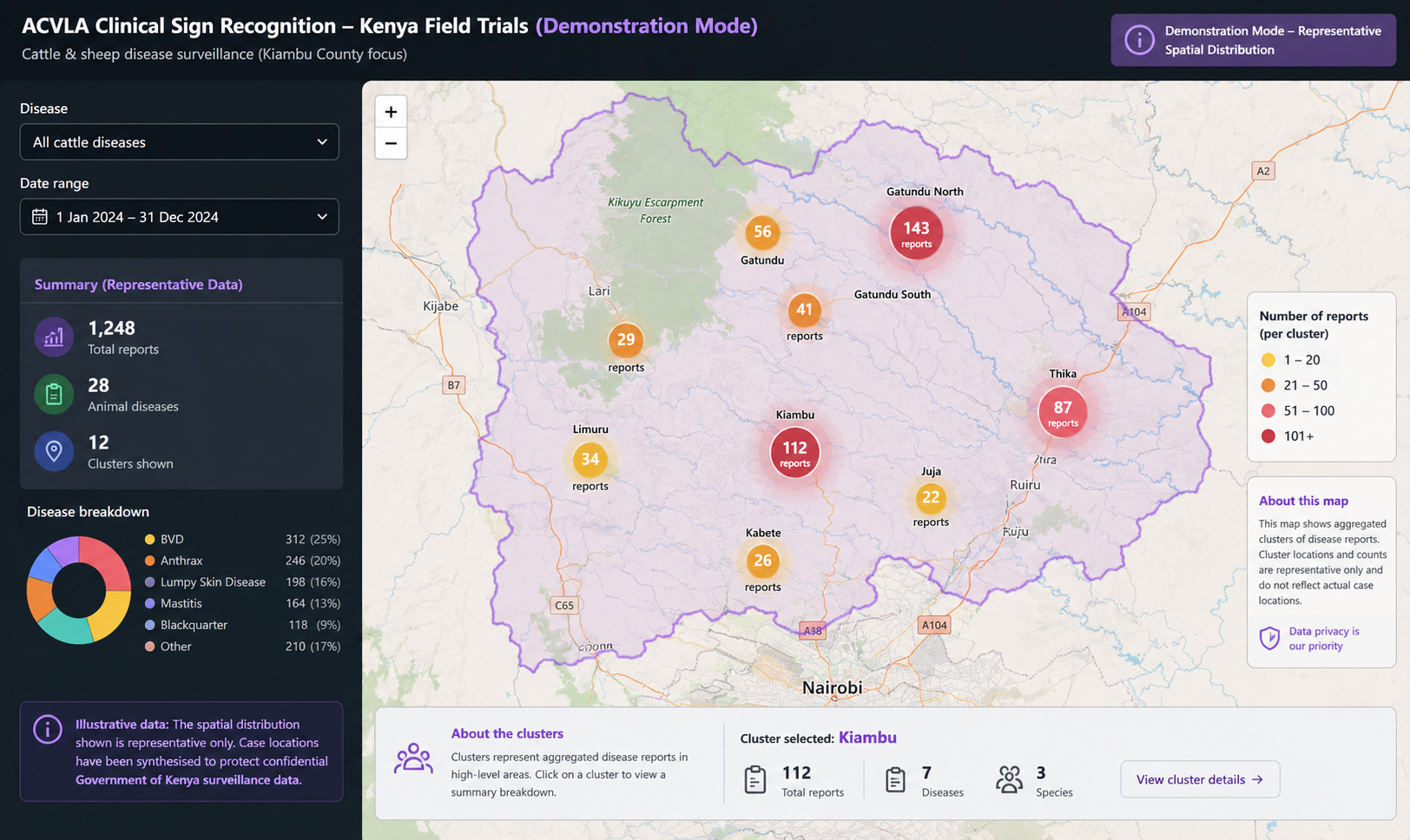
ACVLA currently addresses ruminant diseases but future development will include poultry, donkeys, pigs and camels. A field trial has been successfully carried out in Kenya with real-time geolocated disease data recorded for 1,200 cases covering 45 diseases over a 4-month period. VPPs and vets involved found the App useful in their daily work, resulting in a high level of engagement. ACVLA is currently working with Brooke East Africa to develop a Clinical Sign Recognition App for donkeys and horses.
1,200
cases in Kiambu field trial
45
diseases recorded
4 months
high engagement roll-out prep
Module 04
Veterinary Health Planning
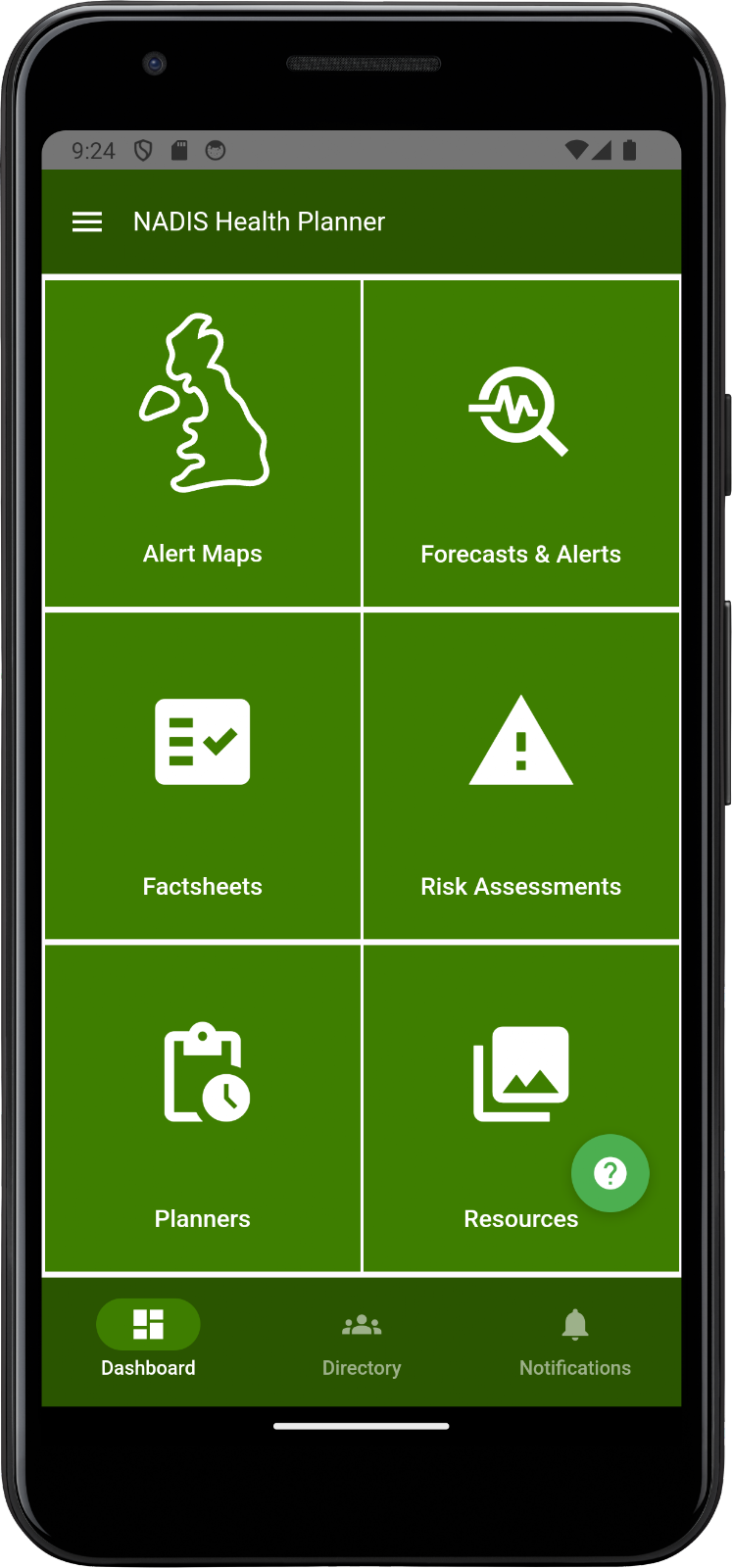
The Veterinary Health Planning App enables vets to remotely manage health plans whilst VPPs carry out the actions on farm, for a more effective use of vet time. The planners are designed for small farms (5-10 cows) that vets would infrequently visit, as well as larger pastoral herds and flocks. The planners improve animal health, productivity and engagement with disease prevention programmes
- More effective use of scarce vet time
- Supports productivity and disease prevention programmes
- Vet-led plans may lower perceived risk for banks and insurers
Discussions with banks and insurers aim to link healthier farms with more favourable lending and premiums — a tangible incentive for prevention.
Module 05
Direct communication to farmers
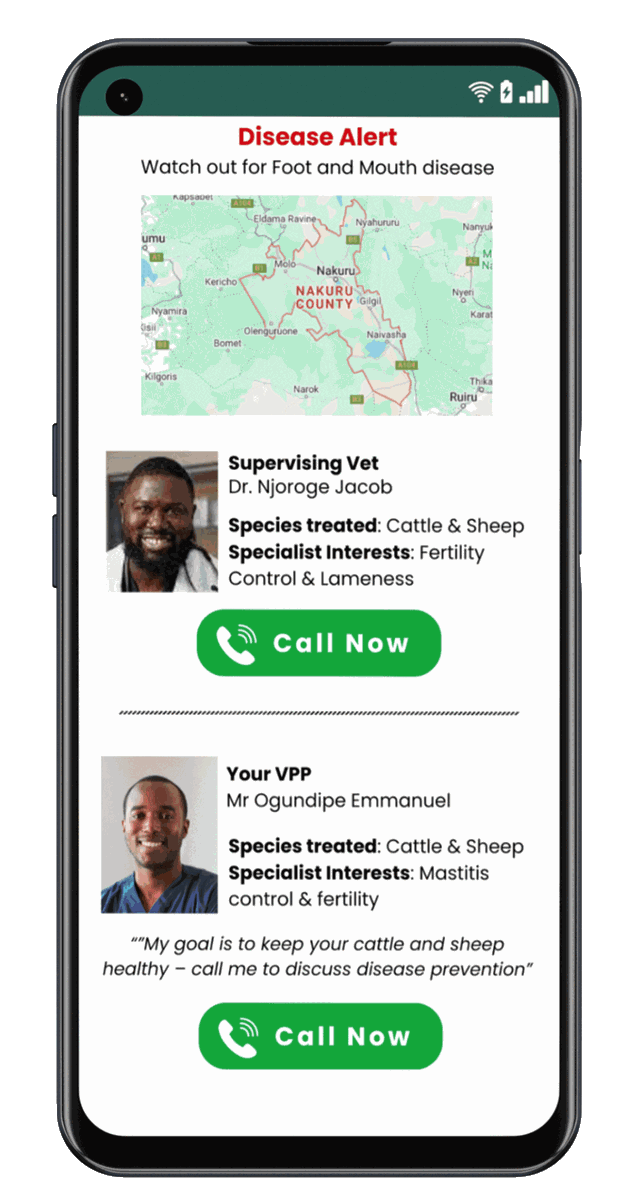
Reach farmers through the VPP or vet they already trust. Regular animal health newsletters — developed with the University of Nairobi Veterinary Faculty — raise awareness of endemic disease and promote VPP services.
With ~100 hard-to-reach farmers per VPP in Kenya, better information flow can lift both animal health outcomes and VPP businesses at the same time.
Supported by
Partners & funders
ACVLA is a joint venture between NADIS and the African Veterinary Technicians Association, funded by GALVmed, Welsh Government (SMART FIS) and MSD Global.
Clinical and treatment content developed with University of Nairobi Veterinary Faculty.
Further information
Contact
-
Mike Howe
NADIS Founder & CEO
[email protected] -
Joel Galloway
ACVLA Veterinary Advisor
[email protected] -
Benson Ameda
President, AVTA
[email protected]